
Baiyu Milky Way Skybox
Java resource pack listed for Minecraft 1.20–26.x. Downloads from the MC Java Mods app on Android.
⬇ Download on Modrinth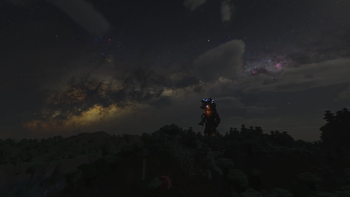
Introduction
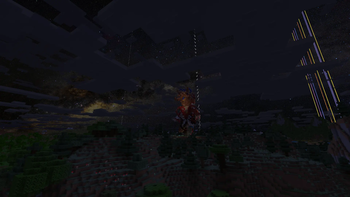
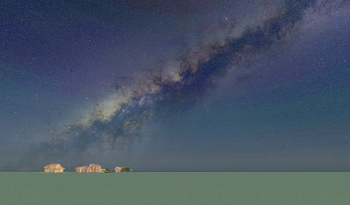
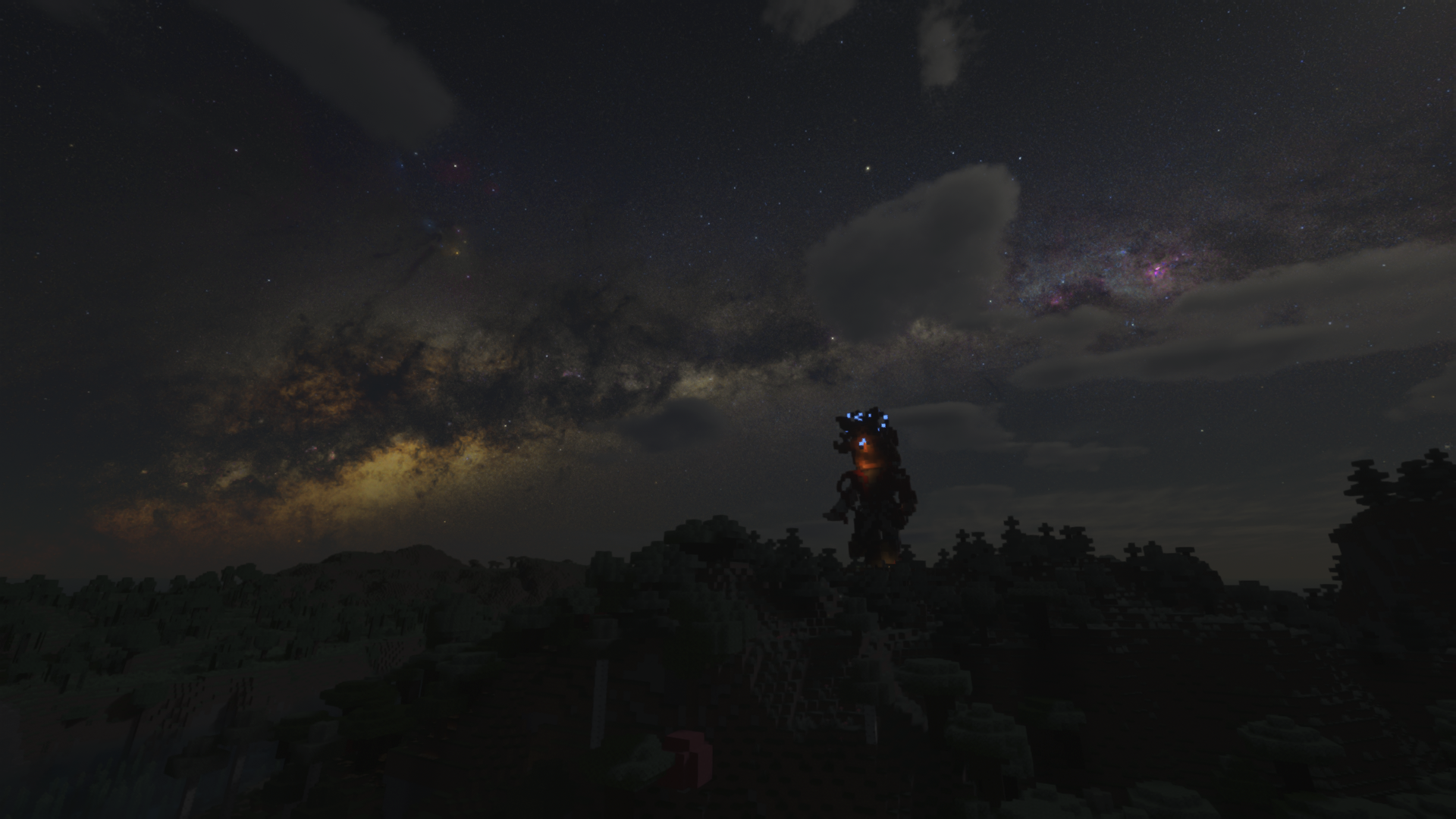
This is a Milky Way space skybox based on the FabricSkyboxes mod. The resource was converted from the Scientific Sky Simulator and currently only provides a night starfield sky effect. Skyboxes for sunrise or rainy weather are not included at this time.
Dependencies
Need Nuit (formerly FabricSkyboxes) : nuit in modrinth
Quick Start
1.1 Install Nuit
1.2 Download resource
Download the latest resource, place it in the folder \resourcepacks\
Advanced
2.1 Extract
Extract \resourcepacks\Baiyu Milky Way Skybox.zip to \resourcepacks\Baiyu Milky Way Skybox\.
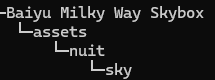
Open the folder \resourcepacks\Baiyu Milky Way Skybox\assets\nuit\sky\ ,edit sky6_starfield.json.
2.2 simplest, during the Winter Solstice
In fact, I do not know whether this specifically refers to the Winter Solstice or January 1st.
"mapping": {
    "0": [latitude, 0.0, 0.0]
},
"axis": {
    "0": [-90 + latitude, 0.0, 0.0]
}
latitude: your located latitude. Positive for North, negative for South (e.g., 22.54 for 22.54°N, -33.87 for 33.87°S).
Leave the other two numbers (0.0) unchanged.
2.2.1 Example Shenzhen (approx. 22.54°N)
Latitude = 22.54
mapping: [22.54, 0.0, 0]
axis: -90 + 22.54 = -67.46, so use [-67.46, 0.0, 0]
"mapping": {
    "0": [22.54, 0.0, 0]
},
"axis": {
    "0": [-67.46, 0.0, 0]
}
2.2.1 Example Sydney (approx. 33.87°S)
Latitude = -33.87 (remember the minus sign for South)
mapping: [-33.87, 0.0, 0]
axis: -90 + (-33.87) = -123.87, so use [-123.87, 0.0, 0]
"mapping": {
    "0": [-33.87, 0.0, 0]
},
"axis": {
    "0": [-123.87, 0.0, 0]
}
2.3 during the Summer Solstice
This configuration sets the initial sky to the Summer Solstice (around June 21). The second number in mapping is fixed at 180.0 to represent the half‑year phase shift.
"mapping": {
    "0": [180 - latitude, 180.0, 0.0]
},
"axis": {
    "0": [-90 + latitude, 0.0, 0.0]
}
latitude: your located latitude. Positive for North, negative for South.- Leave the other two numbers (
0.0) unchanged.
2.3.1 Example Shenzhen (approx. 22.54°N)
Latitude = 22.54mapping: [180 - 22.54 = 157.46, 180.0, 0]axis: -90 + 22.54 = -67.46, so use [-67.46, 0.0, 0]
"mapping": {
    "0": [157.46, 180.0, 0]
},
"axis": {
    "0": [-67.46, 0.0, 0]
}
2.3.2 Example Sydney (approx. 33.87°S)
Latitude = -33.87 (remember the minus sign for South)
mapping: [180 - (-33.87) = 213.87, 180.0, 0]
axis: -90 + (-33.87) = -123.87, so use [-123.87, 0.0, 0]
"mapping": {
    "0": [213.87, 180.0, 0]
},
"axis": {
    "0": [-123.87, 0.0, 0]
}
2.4 On any day of the year
idk.I've been deriving it for several days, but I still don't know how to tackle it. The mapping is really strange; x, y, and z seem to be coupled.But the celestial sphere rotates a bit more each day, so you can wait for the in-game time to pass, and the celestial sphere will also change at the same fixed time each day accordingly.
- Edition: Minecraft Java
- File type: .zip (resource pack)
- Minecraft versions listed: 1.20, 1.20.1, 1.20.2
- How to install: Download the .zip resource pack — do not unzip it. → Put it in .minecraft/resourcepacks. → Enable it in Options → Resource Packs.
- Where to get it: Opens on Modrinth — not every file is mirrored on our own servers.
Install steps are the general flow for this file type — How to install Minecraft Java resource packs walks through it step by step.
- Downloads as Baiyu Milky Way Skybox.zip
- Download size: 71.0 MB
- Download link checked 9 Oct 2026 — working
These come from our own check of the pack file, not from the source page.