
Fleeing Animals
Java mod listed for Minecraft 26.x. Downloads from the MC Java Mods app on Android.
I don't know my version or loader

Fleeing Animals
Fleeing Animals is a simple mod that changes the behaviour of passive entities. Once hit, they will flee as usual (except for some entities such as horses), but the nearby entities will also be alerted and will start running too.
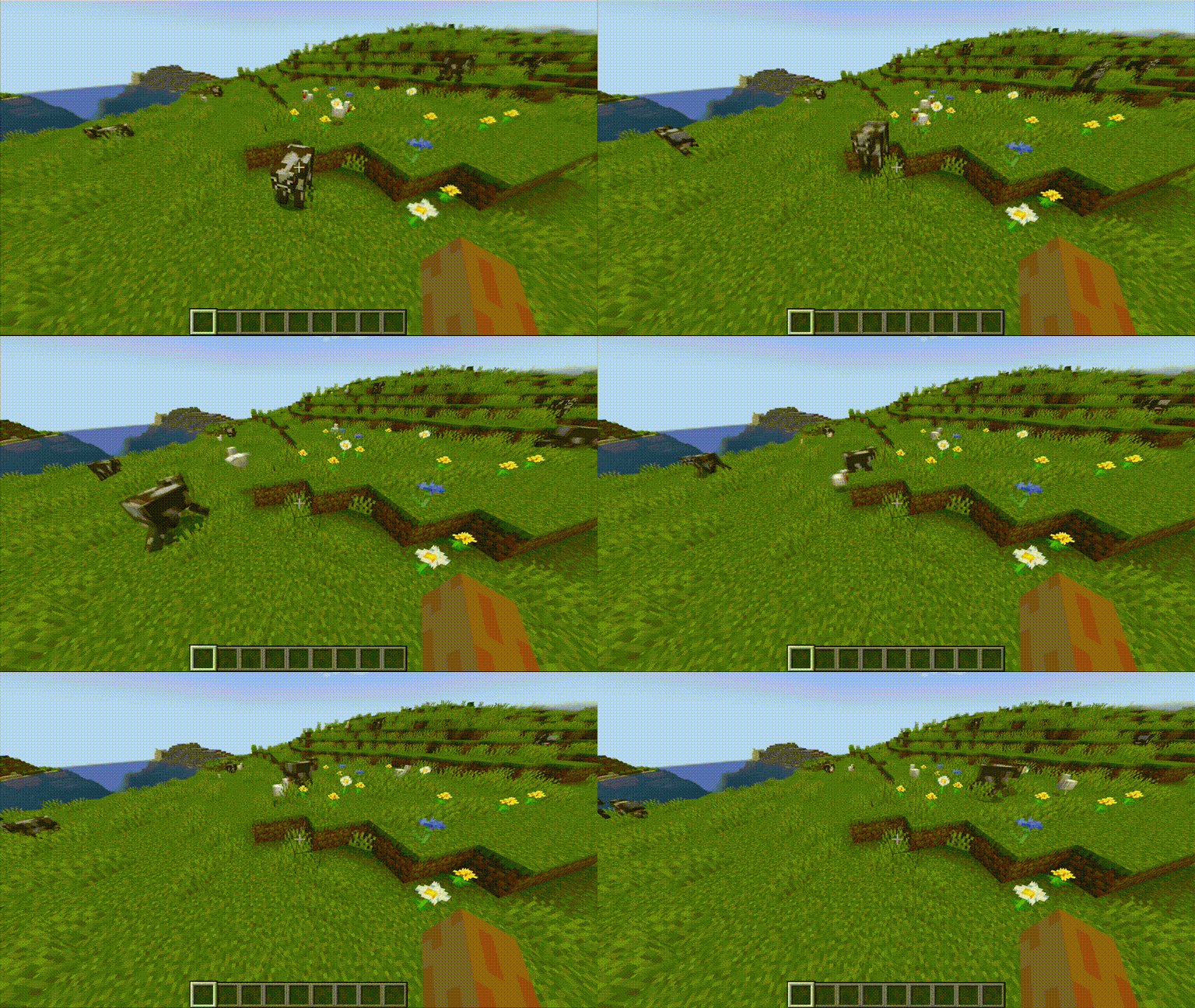
The nearby animals will flee even if you one-shot your target!
Configuration
By default, the mobs will detect any passive mob being hit in their detection range (e.g. the distance where they see you holding wheat, carrots, …), 10 blocks higher or lower than them.
If for some reason, you aren't satisfied with the default configuration, you can tweak some settings:
radiusis a detection range multiplier. If you set it to 2.0, mobs will flee if you hit another passive entity up to twice their follow range.yRadiusis the maximum number of vertical blocks you can be seen by other passive entities. If you set it to 100 for example, animals will detect you if you hit another entity up to 100 blocks over their head.allAnimalsFleedecide whether you want all passive entities to flee when you hit an animal (cows will flee if you hit chickens), or if you want them to flee only when hitting their family (cows will flee only if you hit another cow).
Compatibility
The mod should easily work with most other mods, but compatibility issues may arise. If you encounter a problem, do not hesitate to leave an issue to let me know, and I'll try to fix it.
- Edition: Minecraft Java
- File type: .jar
- Minecraft versions listed: 26.1, 26.1.1, 26.1.2
- How to install: Install the matching mod loader (Forge, Fabric or NeoForge) for your Minecraft version. → Download the .jar. → Put it in the .minecraft/mods folder and launch that loader profile.
- Where to get it: Opens on Modrinth — not every file is mirrored on our own servers.
Install steps are the general flow for this file type — How to install Minecraft Java mods & modpacks walks through it step by step.
- Ships as fleeinganimals-9.0.0.jar — drop this file into the mods folder
- Download size: 183 KB
- Download link checked 10 Oct 2026 — working
These come from our own check of the pack file, not from the source page.