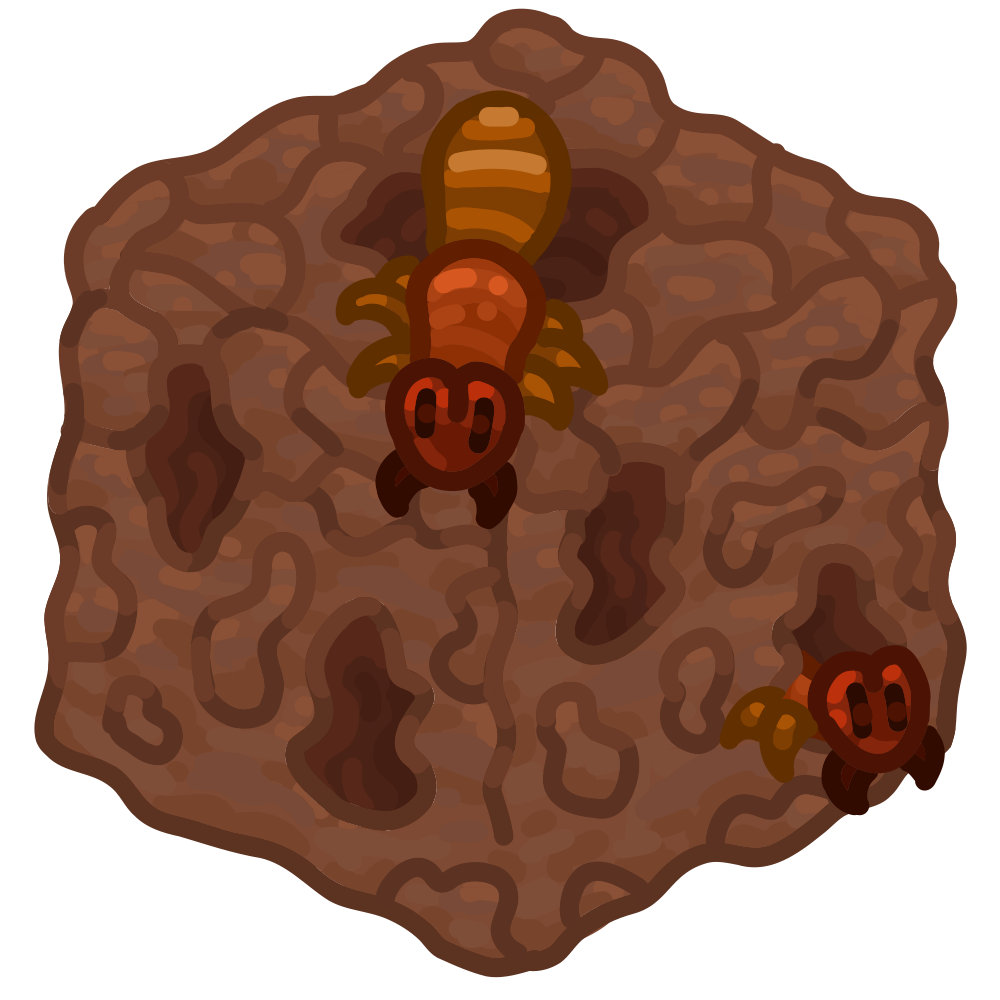
Bugs Aplenty
Java mod listed for Minecraft 1.19–1.21. Downloads from the MC Java Mods app on Android.
I don't know my version or loader
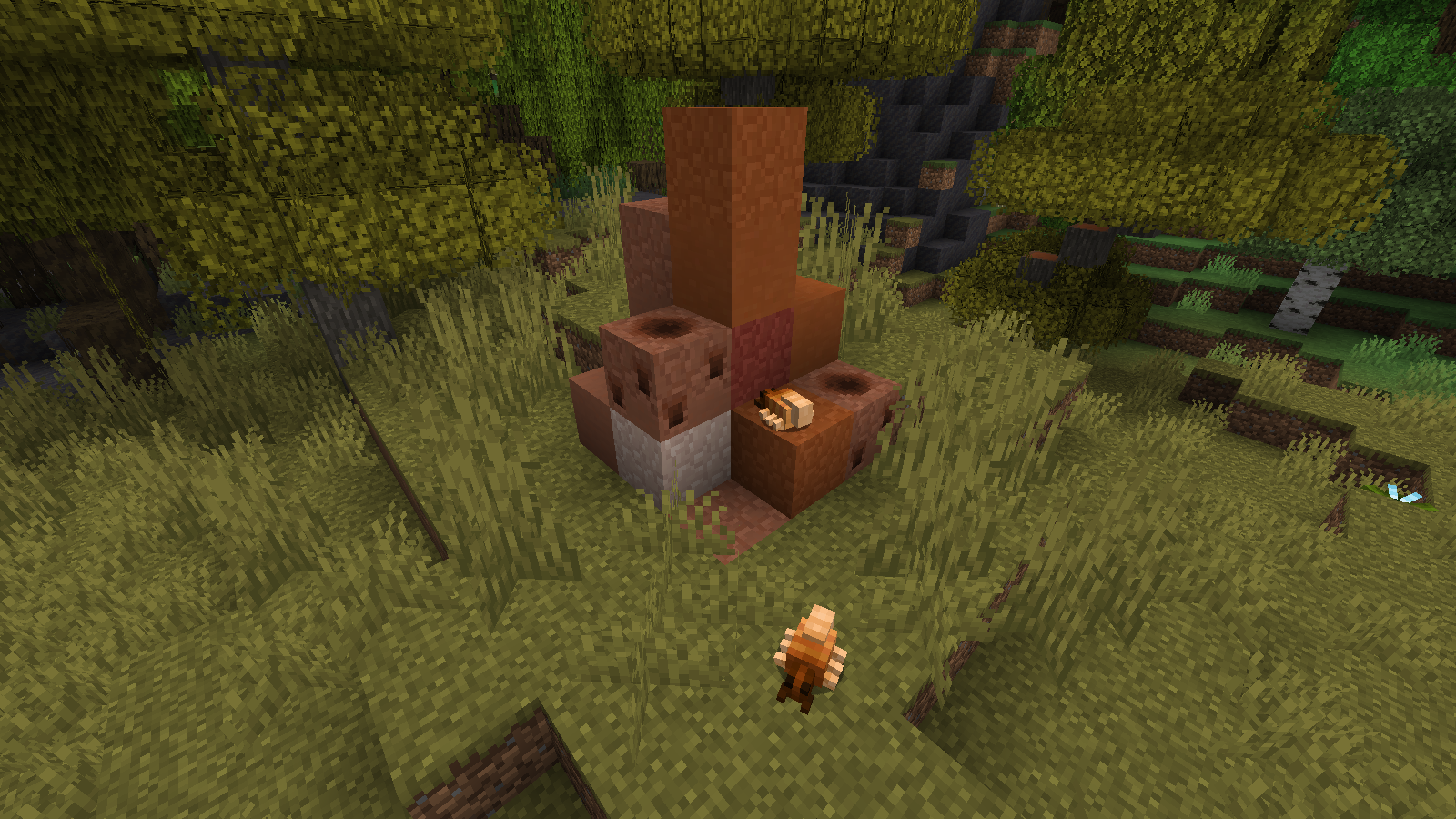
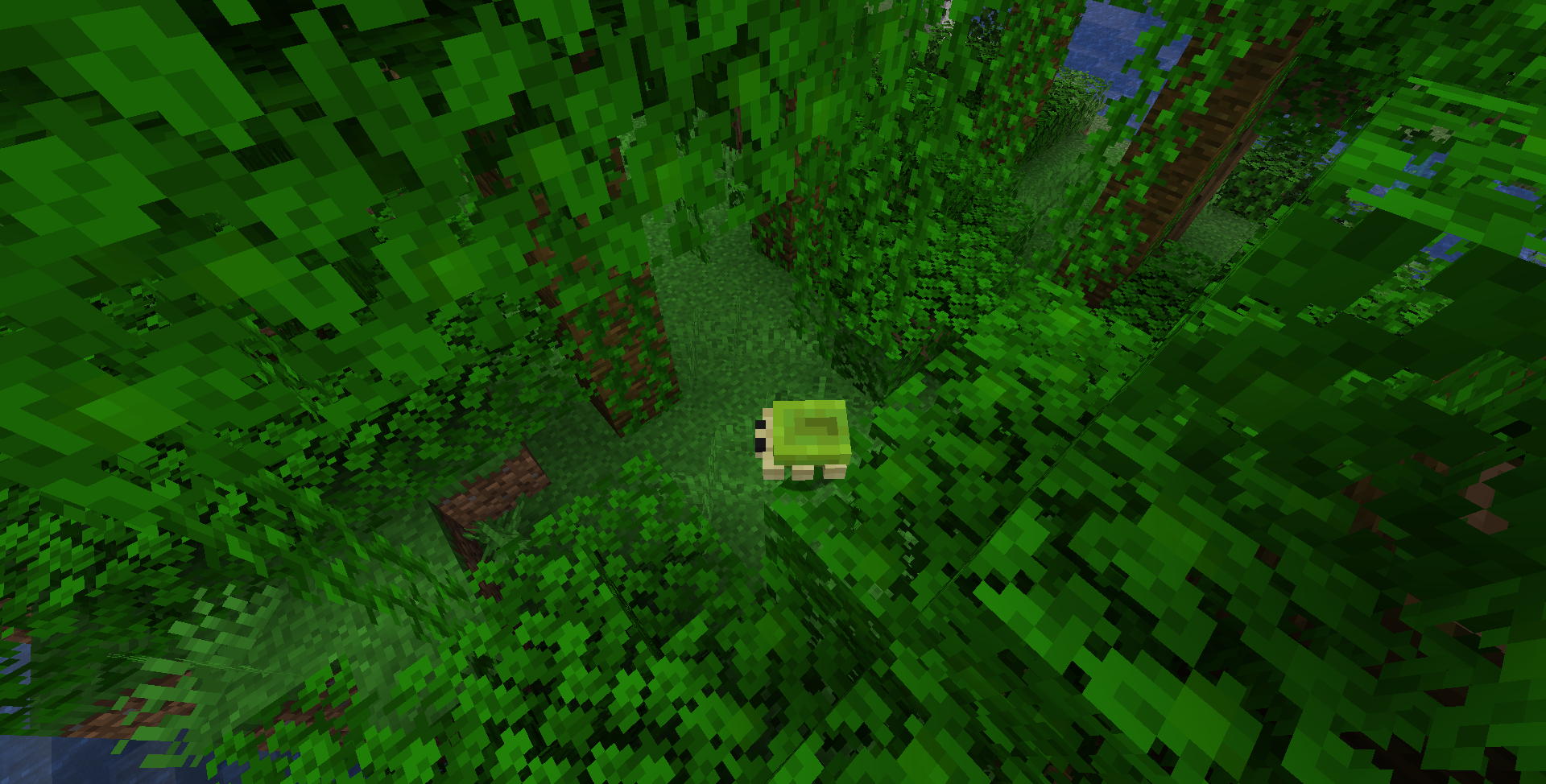

The Overworld can feel a bit empty at times. Where the Oceans, Caves, and Netherworld are brimming with living things and creepy ambience, the Overworld is often strangely silent and lifeless. This mod aims to offer an adorable solution for visual and auditory ambience, as well as some other interesting, insect-related systems. To be clear, the mod is about literal bugs. Any technical bugs are purely for comedic effect, and definitely not my fault.
This mod adds the following:
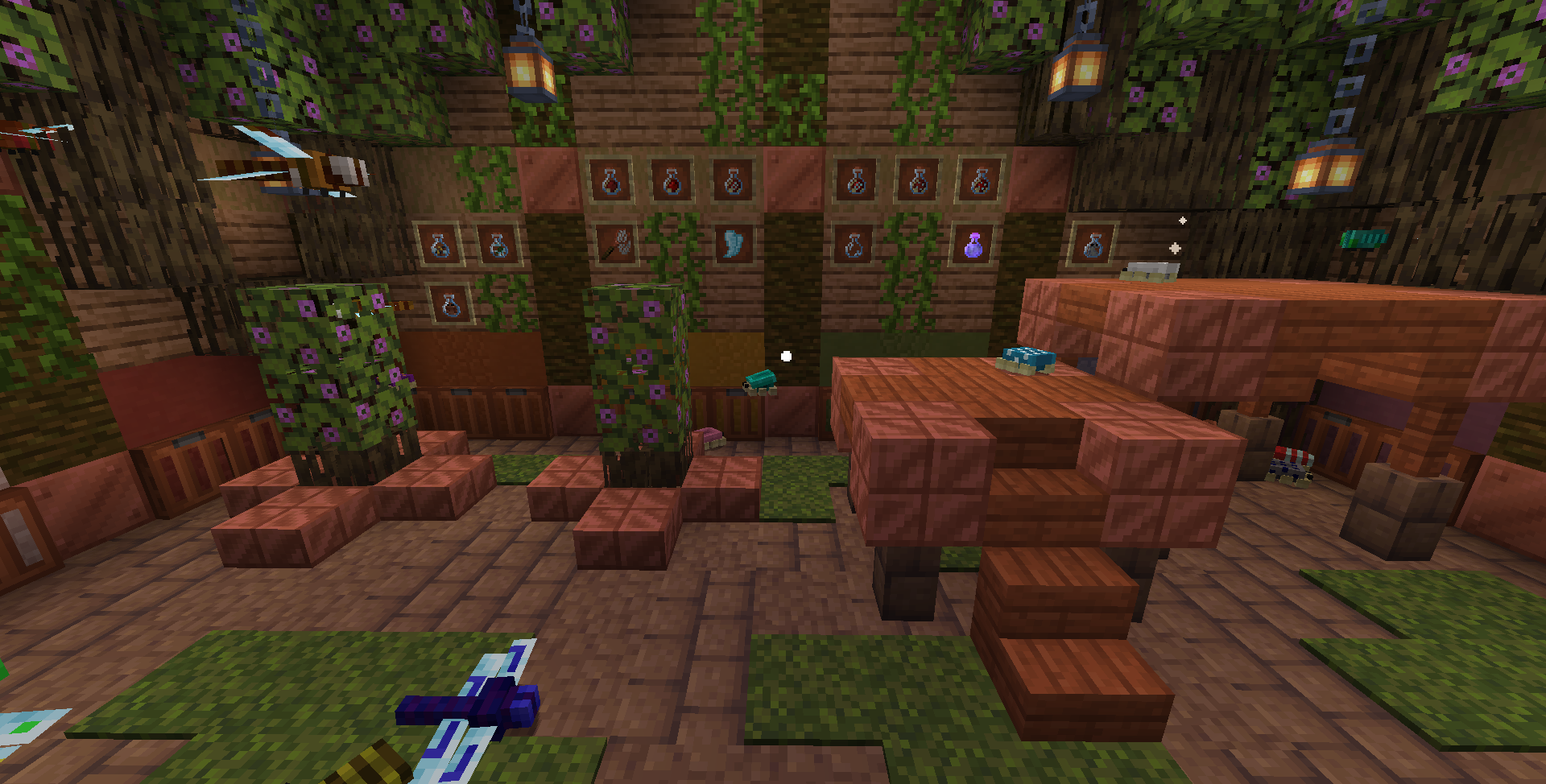
- Loads and Loads of Beetles, small, harmless little critters with loads of different varieties unique to different depths and biomes. Each type of beetle lends unique ambient noises to its respective location, and can be captured via a net and bottles to create a Beetle Bottles- musical instruments, each with a full octave of notes. Each type of beetle produces a unique sound, and some are quite rare, providing a unique collectable in addition to adding a little bit of life to otherwise silent areas.
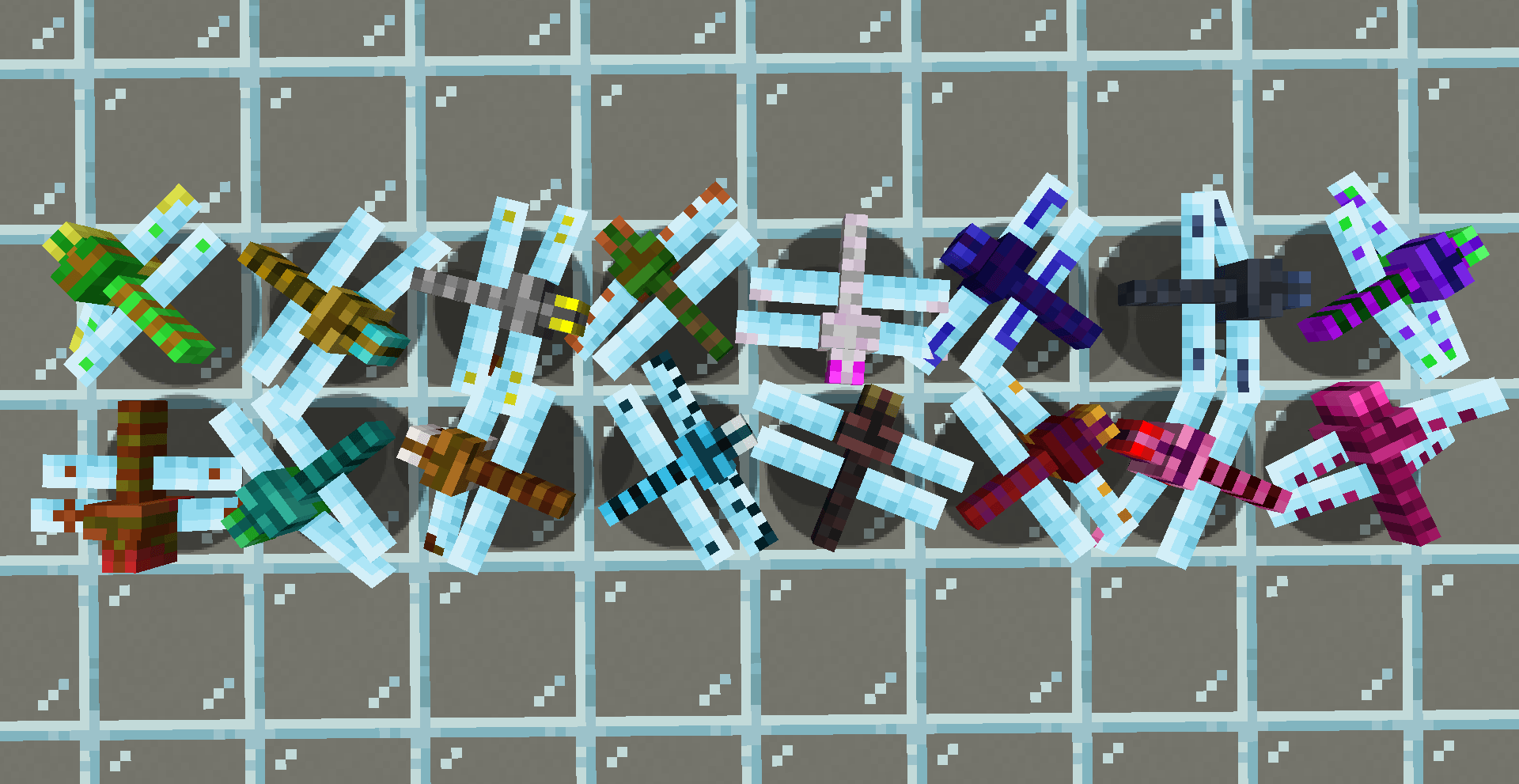
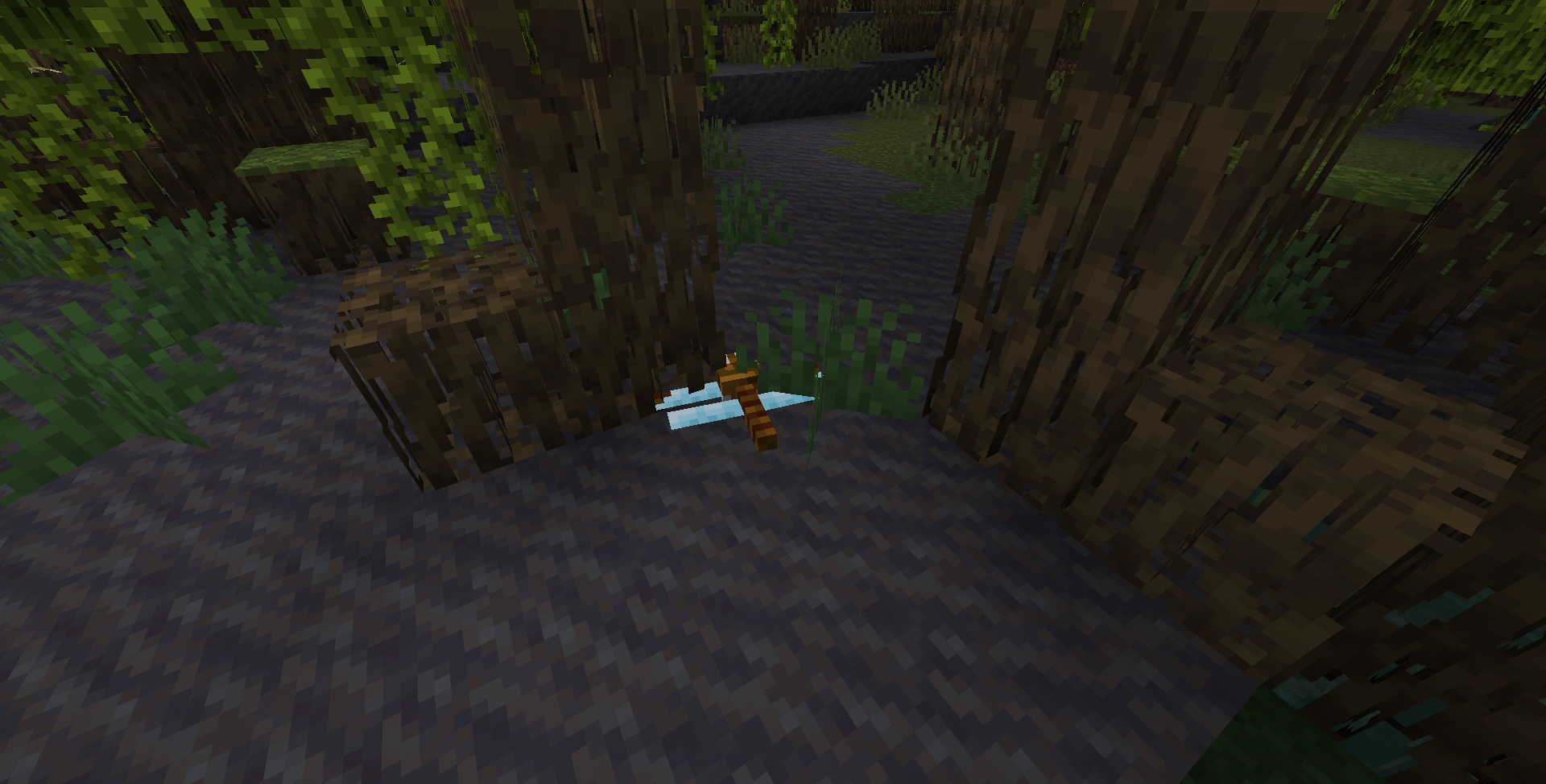
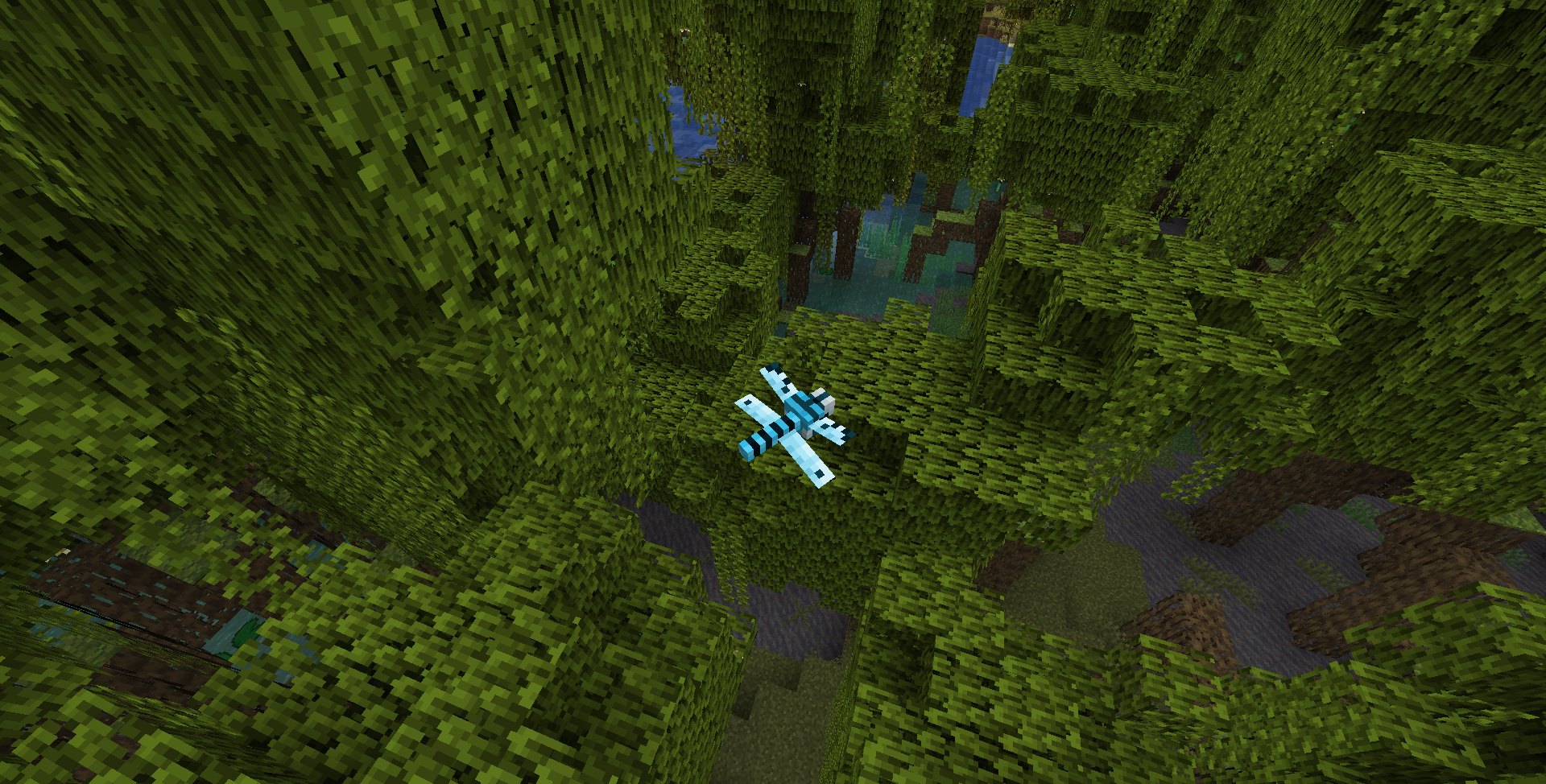
- Dragonflies, another ambient mob unique to swamps, mangroves, and jungles. They're hard to catch, but their wings can be used to make a new Potion of Levitation. Not the most useful for oneself, but a great deterrent for your enemies...
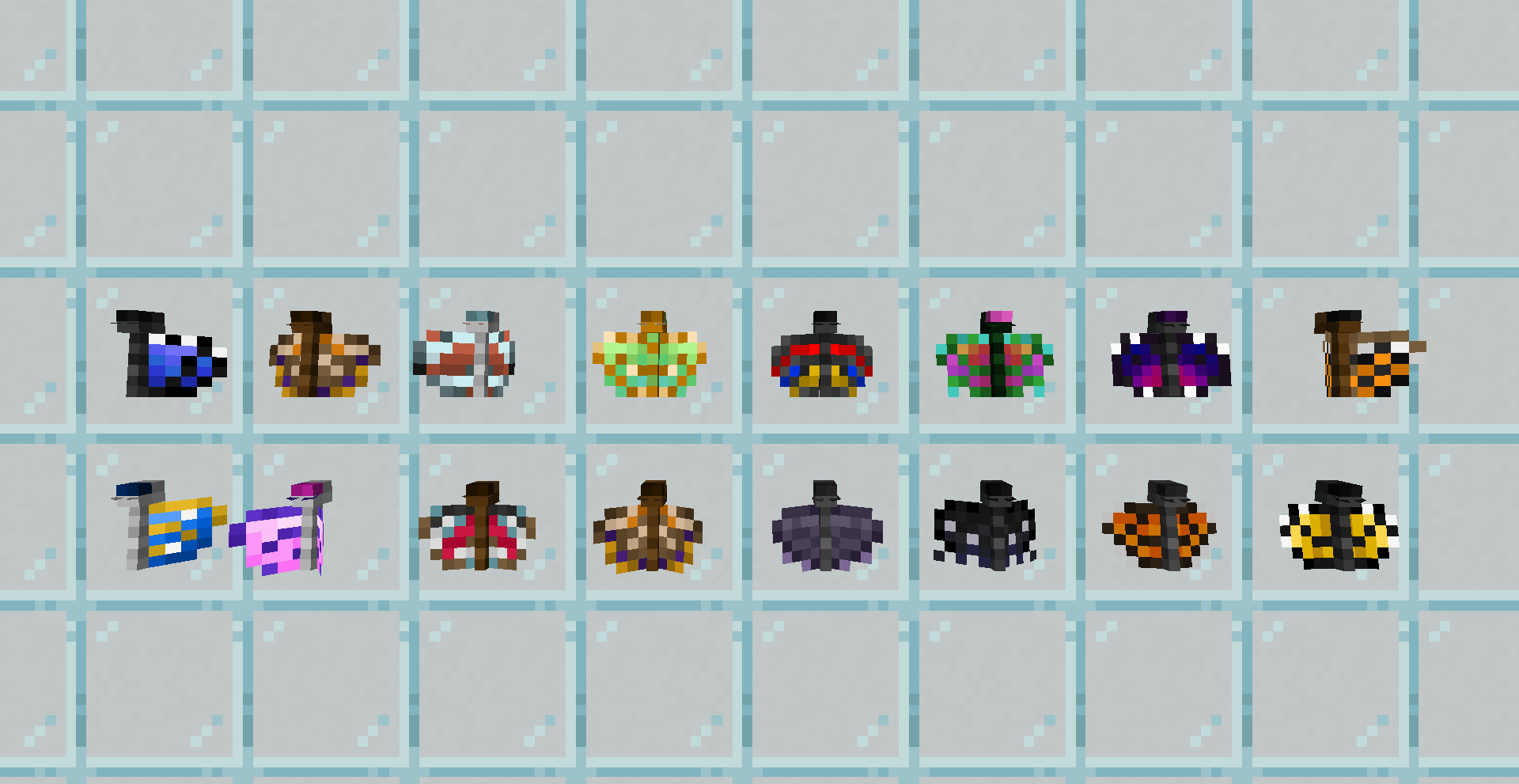
- Butterflies! They do literally nothing, but they're very pretty.
- Termites, an insect whose mounds can be found in savannas and badlands. They seek out nearby wooden materials, harvest them, and then store them in their nests. Termites can be used to obtain different shades of Cobbled Terracotta, (a nifty new building block), and more technical players can use them to create less explosive means of farming wood.
...And that's about it. There's a more extensive changelog below for those interested. ...Otherwise, happy bug hunting!
This mod Requires Geckolib to Work, because all the insects have cool animations and stuff.
COMPLETE CHANGELOG
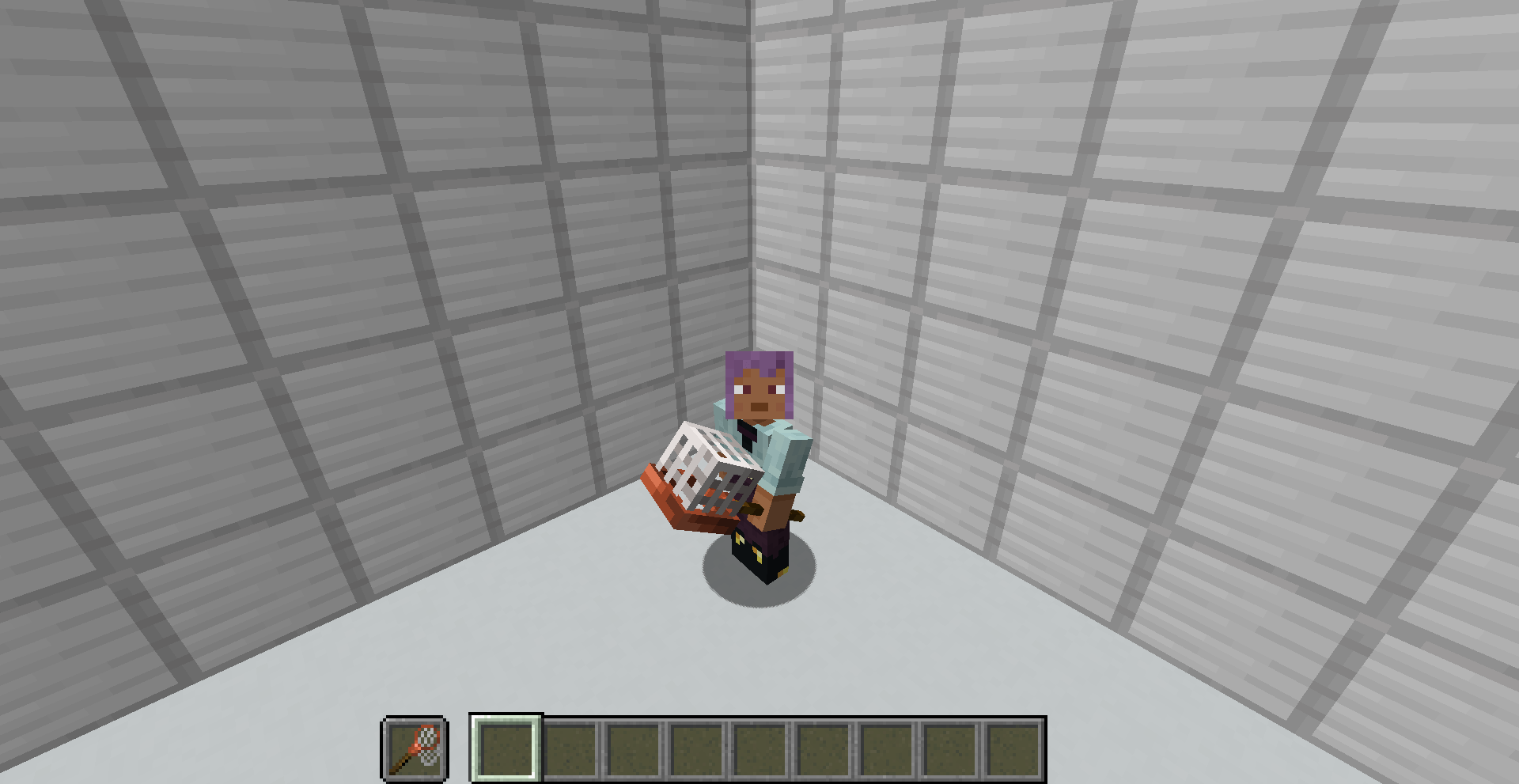
The Copper Net is the tool of choice for beetle hunters, and is crafted using copper, sticks, and string. Swinging it puts all nearby beetles into any bottles the player has on them.
- In addition to beetles, Silverfish, Termites, Dragonflies, and Bees can all be captured and released in this manner.
- Without bottles, the net doesn't do anything.
- This mechanic also unintentionally creates a brand new Minecraft sport, which I've decided to call 'Silverfish Lacrosse,' which is exactly what the name implies.
Beetles are an ambient mob that comes in sixteen different colors. Each color has three different patterns, (Plain, Striped, and Spotted, in order of rarity), and each pattern has a one in ten chance of being shiny. Plain and Shiny beetles make different ambient and musical noises, but otherwise pattern is purely cosmetic. (And a flex for more determined bug trackers)
- Beetles have an 80% chance of being plain, a 15% chance of being striped, and a 5% chance of being spotted. Whether or not a beetle is shiny is determined separately. (This gives the elusive Shiny Spotted variant of each beetle a slim one in two hundred chance of spawning.)
- Beetles take about 6-12 seconds between making ambient noises, and don't do so when a player is directly nearby; with noises lasting 2-5 seconds. Beetles try to avoid players, and shiny beetles are especially speedy.
- Beetles captured in bottles can be used as musical instruments; right clicking plays a note, with the angle the player is looking at determining the pitch. (Look down for lower notes, and up for higher.) Sneaking and right clicking releases a beetle, which also produces a distinctive noise. (Since there are 16 colors, each with regular and shiny variants, there are thus 32 different insect-based musical instruments to hunt down.)
- Red Gulpbeetles are found in mangrove swamps, Dark forests, and Crimson Forests. They produce a deep-throated ribbiting noise.
- Orange Thrumbeetles are found in Badlands and Savannas. They produce a deep humming cello noise.
- Yellow Humbeetles are found in Praries, Savannas, Meadows, and Badlands. They produce a cicada-like violin sound.
- Lime Flutebeetles are found in Jungles and Lush Caves. They produce a bamboo-flute noise crossed with a weird bird sound.
- Green Bopbeetles are found in Taigas and Dark Forests. They produce a deeper, echoing drum noise.
- Cyan Pulsebeetles are found rarely in Jungles, and more commonly in Warped Forests. They produce a somewhat exotic, synthy pulsing sound.
- Light Blue Chimebeetles are found in Snowy Taigas and Ice Spikes. They produce icicle chiming noises.
- Blue Seabeetles are found exclusively on beaches and stoney shores. They produce a retro organ noise crossed with an ocean sound.
- Purple Strumbeetles are found in Birch forests. They make mournful strumming noises similar to that of a guitar.
- Pink Plinkbeetles are found in meadows and flower forests. They make an echoey musicbox noise.
- Magenta Glitchbeetles can exclusively be obtained through the wandering trader, who'll sell them to you for an exorbirant fee. They make particularly bizarre synth noises.
- Brown Clatterbeetles are found in a variety of biomes, most commonly in forests. They make rattling wooden noises similar to that of a woodpecker.
- White Songbeetles are found in Taigas and snowy biomes. They make ghostly choral noises.
- Light Gray Bellbeetles are found in upper-layer caves. They make weird bell noises similar to those in Disc #13.
- Gray Wispbeetles are found in deep caves and basalt deltas. They make deep, ominous whispering noises, just in case the normal cave noises weren't sufficiently worrying.
- And lastly, Black Rockbeetles are exclusively found in basalt Deltas, and make an infernal sort of rock guitar noise. Highly sought after, I'm sure.
Dragonflies are an ambient flying mob found in swamps, mangroves, and jungles.
- There are sixteen different color patterns more loosely based off of the existing sixteen dye colors; though unlike beetles, this effect is purely cosmetic. (With the exception of the Magenta Dragonfly, which is also exclusively obtained through the Wandering Trader, for the sake of making life more difficult for completionists.)
- Dragonflies are extremely speedy, and fly around in erratic zig-zagging patterns that I coded in myself, swerving quickly to avoid walls, and (mostly) succeeding in being quite agile.
- Dragonfly wings can be used to brew Potions of Levitation. The Status Effect was already in the game of course, but for some reason didn't have a potion. Not anymore! These can be used just like any other potion, and, while not particularly useful for yourself, should be extremely effective against mobs and players alike... That being said, Dragonflies can't really be farmed, and they're annoyingly hard to catch, so don't expect to have a lot of these on hand.
Termites are an insect spawned by Termite Nests, which are found in Savannas and Badlands.
- Termite Nests occasionally spawn termites if there aren't any nearby. Placing a campfire underneath them disables this behavior, and also allows you to break the nest without a bunch of angry termites chasing you. They can be collected and transported using Silk Touch.
- Termites seek out wooden blocks to infest. Once inside, they burrow up to the highest available wooden block, and, after a while, break it. Once finished, they burrow back down to the lowest available block and exit the wood. This may seem a bit odd, but allows them to tear down structures from the top down; and to effectively chop down trees over longer periods of time.
- An infested block emits a buzzing sound, as well as distinctive particles to indicate the presence of termites. If you're quick, you can break it and kick them out before they steal your precious timber.
- Once a Termite has collected wood, (or goes long enough without finding any), they return to the nearest nest and deposit it inside. Sneaky farm-prone players can empty nests automatically using hoppers.
- When a Termite Nest ticks, it also tries to convert nearby terracotta into Cobbled Terracotta. This new building block is basically identical to regular terracotta, with a different, more textured appearance. It can be obtained in all sixteen colors, (plus its default shade), but only via. Termite Nests- it cannot be crafted.
- Supposedly, Termites and Silverfish really don't get along. I'm not suggesting you should make an insect fight pit, but I wouldn't say no to one either.
A special new Achievement, (Appropriately titled 'Come Together,' under the husbandry section), can be obtained by collecting 100 beetles in bottles. This technically just counts the number of times you've put a beetle in a bottle, so you could, of course, just catch and release the same beetle 100 times. (This wouldn't really be in the spirit of the achievement, but whatever.)
MISSELANEOUS TECHNICAL JUNK
- Needless to say, this mod does add quite a few more entities to your world. All insects are considered Ambient Mobs, (the same thing as bats), and thus spawn in and out pretty easily if not named. I haven't had any performance issues with the default spawn rates, but please keep in mind that increasing the number of entities loaded in at any given time by a rough 20% could have problems for some devices.
- All insects use status effects to time various behaviors, (because I found NBT data to be a bit too inconsistent for this sort of thing.) Beetles, for example, are given a random amount of invisible 'Luck' after making an ambient noise, and make an ambient noise after the effect runs out. A similar process is used to make dragonflies intermittently stop flying and change direction. None of the effects used are obtainable in Vanilla Minecraft, but clearing effects via. commands or stuff will interfere with pathfinding and whatnot.
- Termites are, obviously, quite a bit more complicated, and were, quite honestly, a nightmare to get working, mostly because Minecraft's built in pathfinding system was never intended to target the interiors of blocks. As such, instead of pathfinding normally to their target locations, invisible 'pheremone' entities are spawned to direct Termites where to go. (They despawn automatically after a couple of seconds when termites are unable to reach their targets.) Termites automatically set pheromones on nearby wood blocks if they don't detect any existing ones nearby, and then attempt to attack them. (They instead wind up entering the block upon arrival.) You can place pheremones manually using commands if you want to watch Termites run around to them.
- Termite Nests spawn a termite when randomly ticked if their top is clear, and if there aren't more than three termites within a twelve block radius.
- Termites wander around aimlessly when they have the Unluck effect; or when they have Luck but cannot locate a wooden surface. When spawned, a Termite is given a little over a minute and a half of Luck; and searches for a wooden surface until its Luck runs out. When a Termite is out of Luck, (or its inventory is full), it instead navigates back to the nearest nest. If it cannot reach the nest, but is still within range, its Luck is randomly extended, causing it to wander around for longer until it can find a path.
- When a Termite gets near enough to a pheromone, (the marker entities it spawns to navigate to wooden blocks), it vanishes and produces a 'termite infestation' entity that attempts to seek out the highest wooden block in a chain- the infestation is capable of moving one block straight or diagonally as it moves upwards, in order to allow various tree shapes to be properly felled. Once the Infestation runs out of Luck, (it takes a little under twenty seconds), it does the reverse, seeking out the lowest block in the chain with air adjacent to it, and spawning a termite with the destroyed block in its inventory adjacent to the lowermost block.
- Termite Nests have a single stack worth of storage, but can, of course, be emptied out with hoppers.
- Campfires placed with a clear path beneath a Termite Nest prevent it from spawning termites, and from spawning angry termites when broken.
- Most wooden blocks, (with the deliberate exception of Nether Hyphane), are edible by termites, including stairs and slabs. This is controlled using a tag, and will thus include Cherry Wood once the mod updates to 1.20.
- The only part of Termite behavior altered by the 'DoTermiteGriefing' gamerule is the point where the block is destroyed. If the gamerule is set to false, Termites will behave as normal, but the targeted block will not break, and the Termite's inventory will not fill.
- I am aware that Termites can spawn in the same biome as Savanna Villages, whose buildings are made primarily of edible blocks. I was going to prevent Termite Nests from spawning near villages, but, quite honestly, this is kind of amusing. Relatedly, lava pools can spawn anywhere and basically always set things on fire. (If it's really a problem though, this would not be difficult to remove in a future update.)
- Dragonfly pathfinding does occasionally lead them to get stuck in walls when navigating around partly-solid blocks such as chains and fences; in order to counteract this, they have a behavior that will automatically shove them out of solid blocks when trapped rather than damaging them. This shouldn't be particularly noticeable, but should allow you to safely display dragonflies without them all suffocating to death at random.
- Beetle spawning functions using a unique system to prevent it from interfering with other mobs; the game ambiently attempts to spawn beetles on natural blocks around the player so long as there aren't already more than five in the vicinity. Beetles that haven't been bottled by the player despawn if the player gets more than 32 blocks away from them.
- Fun Fact! All the mobs added by the game are technically arthropods, and this mod thus effectively adds 113 more mobs that 'Bane of Arthropods' is effective against! However, since Termites are literally the only potentially hostile ones, (and aren't very threatening at that), rest assured that Bane of Arthropods is still totally useless.
The source code for this project is now available on Github. Use it as you wish.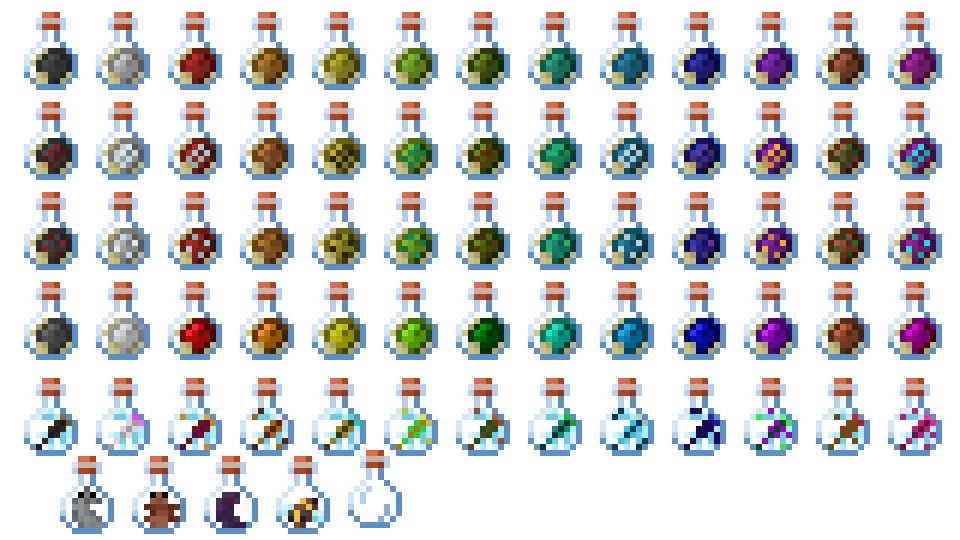
- Edition: Minecraft Java
- File type: .jar
- Minecraft versions listed: 1.21.1, 1.20.1, 1.19.4
- How to install: Install the matching mod loader (Forge, Fabric or NeoForge) for your Minecraft version. → Download the .jar. → Put it in the .minecraft/mods folder and launch that loader profile.
- Where to get it: Opens on CurseForge — not every file is mirrored on our own servers.
Install steps are the general flow for this file type — How to install Minecraft Java mods & modpacks walks through it step by step.
- Ships as BugsAplentyV1.3.jar — drop this file into the mods folder
- Download size: 6.4 MB
- Download link checked 26 Sept 2026 — working
These come from our own check of the pack file, not from the source page.