

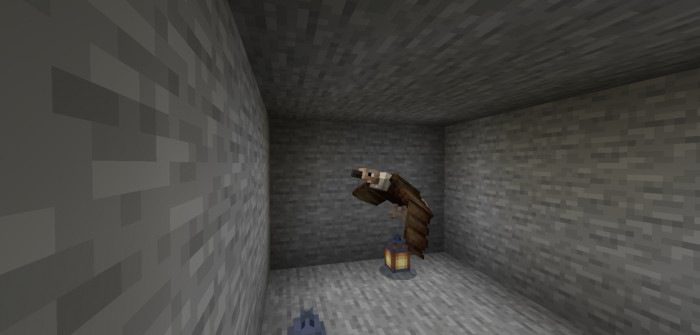

The Sky Of Birds Addon introduces three new mobs to Minecraft Bedrock Edition: The Eagle, The Vulture, and The Seagull. These mobs behave similarly to other flying mobs in Minecraft and can be found in the sky. The Eagle and the Vulture are hostile towards both undead and living beings (including the player and certain animals).
Features:
How to operate:
- The three mobs will not spawn naturally. You have to use the /summon command to spawn the creators into your world.
Entities:
The Eagle
- The Eagle is a hostile mob.
- Eagle are tamable by giving fish, chicken, and beef.
- Eagle follows the owner after taming.
- Eagle are nameable by using a name tag.
- Eagle’s attack the undead and the player and some animals.
The Vulture
- The vulture is a hostile mob.
- Vulture are tamable by giving fresh beef not cooked fish.
- Vulture’s are nameable by using a name tag.
- Vulture follow their owner.
- Vulture’s attack the undead and the player and some animals.
The Seagull
- The seagull is not a hostile mob.
- The seagull is tamable by giving the cooked fish, fresh fish, and cookies.
- Seagulls are nameable by using a name tag.
- Seagulls follow their owner.
- Seagulls hate drowning so they only drowned’s. They also attack some reptiles and fishes.
The Sky Of Birds Addon Download Links
For Minecraft PE/Bedrock 1.19
mcaddon: Download from server 1 – Download from server 2
Quick facts
- Edition: Minecraft Bedrock
- File type: .mcpack or .mcaddon
- Minecraft version listed: 1.19
- How to install: Download the .mcpack or .mcaddon file. → Open it — Minecraft imports it. → In your world: Behavior Packs → Available → Activate, then the same under Resource Packs.
- Where to get it: In MCModsHub, or directly above on this page.
Install steps are the general flow for this file type — How to install Minecraft Bedrock addons & mods walks through it step by step.
Verified by MCModsHub
- Pack type: .mcaddon — behaviour and resource pack in one file
- Manifest requires Minecraft 1.17.0 or newer
- Complete pack — everything it depends on is inside the file
- Download size: 85 KB
- Download link checked 17 Jun 2026 — working
- Mirrored on our own servers — the download does not depend on the original host
These come from our own check of the pack file, not from the source page.